Ana Tot
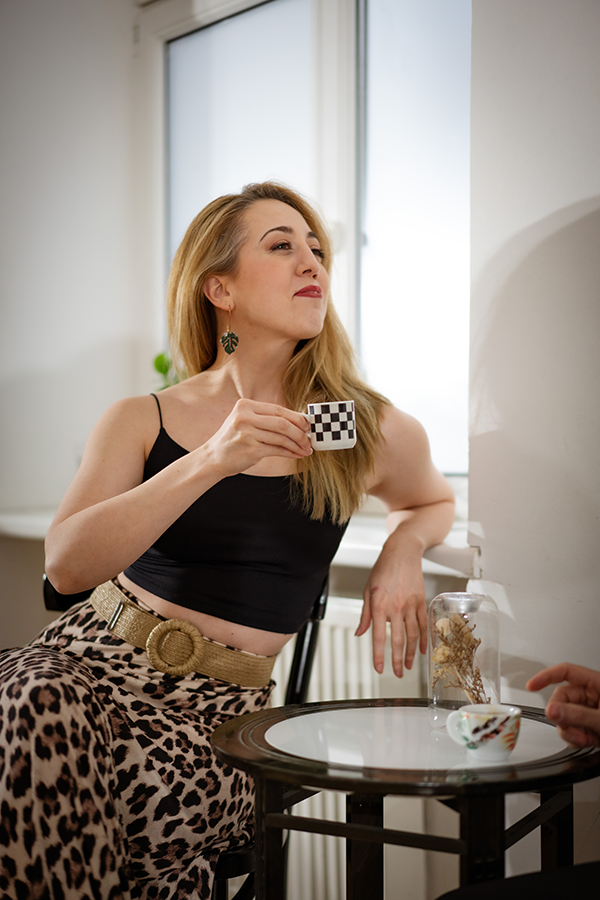
Ana Tot is a professional contemporary and tango dancer whose relationship with movement began at the age of four. Her foundation in classical ballet and modern dance education led her to the Budapest Contemporary Dance Academy, where her curiosity turned deeply toward human anatomy, biomechanics, and the use of ground and center as the origin of movement.
Rather than pursuing movement as form alone, Ana became interested in how the body moves — and how movement can feel natural, healthy, and expressive at the same time.
Her love for South American culture and life brought her to Buenos Aires, where she encountered tango for the first time. She was immediately drawn to its history, musical depth, and emotional honesty. Improvisation — its mystery, freedom, and constant creation — became a key influence in her search for organic movement in dance.
Ana brings her contemporary dance background into tango with clarity and sensitivity. Her focus lies on efficient and natural body movement, grounding, musicality, and body awareness.
By simplifying movement and working with body mechanics and natural flow, Ana creates space for creativity, expression, and individuality. Her teaching gently guides students away from tension and overthinking, inviting them toward ease, curiosity, and authenticity.
Ana has performed in contemporary theatre productions, tango stage shows, live music events, and milongas, including appearances at Konzerthaus Vienna, Lalish Theatre, Altes Theater Steyr, gallery openings, and local milongas in Vienna and Budapest.
Our approach
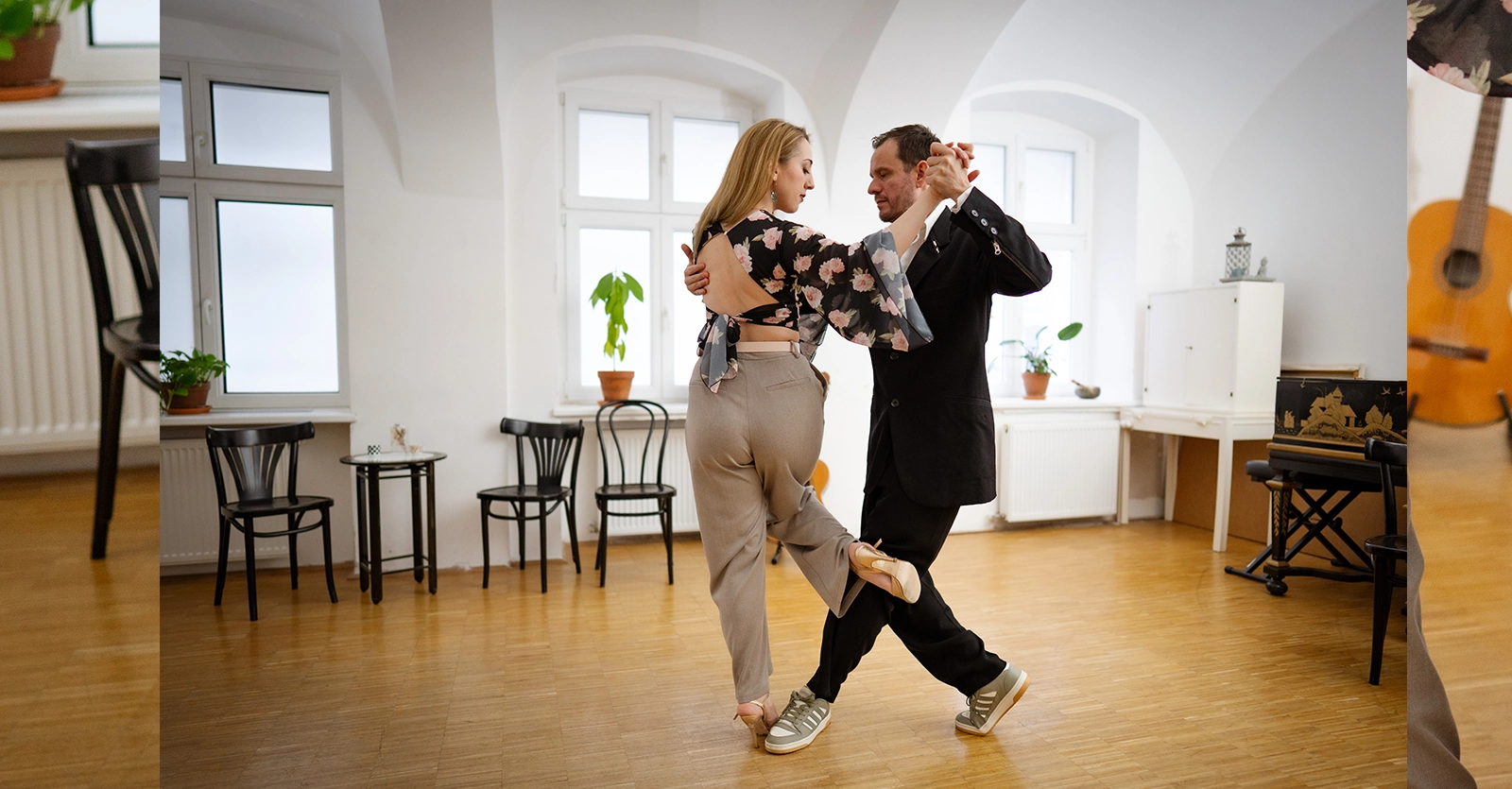
We believe tango should feel natural, understandable, and alive in your own body. Our teaching combines traditional tango knowledge with contemporary movement understanding, focusing on clarity, structure, and efficient movement rather than memorizing endless figures. We break tango down to its essential principles so dancers can understand why something works — not just imitate shapes or steps. At the core of our work is the idea that every dancer learns differently. We encourage curiosity, exploration, and a healthy trial-and-error process. Mistakes are not failures; they are part of developing sensitivity, coordination, musicality, and personal understanding. We work with natural body mechanics, timing, connection, and simple movement structures that create a strong foundation for both social dancing and artistic expression. As understanding grows, dancers become freer, more confident, and more capable of finding their own voice within tango. Rather than creating copies of a style, we aim to help each student develop awareness, authenticity, and a personal relationship to movement and music. Our classes are structured, practical, and often myth-busting — but always warm, human, and open to questions. We value depth without heaviness, precision without rigidity, and learning without fear. Because tango is not about dancing like your teacher. It is about understanding movement deeply enough to dance as yourself.
Jorge Bosicovich
Born and raised in Argentina, Jorge Bosicovich’s connection to tango began through its music, culture, and atmosphere long before dance itself entered his life. Over time, he fell in love with the embrace, the subtle communication within the couple, and the depth of expression tango allows.
His path led him to study with many renowned tango teachers, including Rodolfo “El Chino” Aguerre & Miho Omaki, Gustavo Naveira, Gustavo Rosas, Sebastian Arce & Mariana Montes, Mariano “Chicho” Frúmboli & Juana Sepúlveda, Graciela Gonzalez, Olga Besio, and others.
Since 1999, Jorge has been living, teaching, and performing throughout Europe. Based in Vienna, he is the founder of Tanto-Tango Studio and has choreographed for theatre productions, short films, and the Academy Award–winning film The Counterfeiters.
More than 25 years of teching experience:
What defines Jorge’s teaching is not complexity, but clarity. He guides students toward understanding tango through connection, musicality, and natural movement rather than rigid patterns or memorized sequences.
His approach is deeply rooted “children’s play” and “trial and error”, allowing students for easy-going learning path and enjoying damce from the first steps; respecting the depth of tango tradition while remaining open, relaxed, and human. Studying stricture and movement rather than sequences gives his students another view on the tango movement. His students describe every class as eye-opening, mind-blowing and pure inspiration. He encourages dancers to develop their own unique style, sensitivity, listening, and trust — both in themselves and in the partnership.